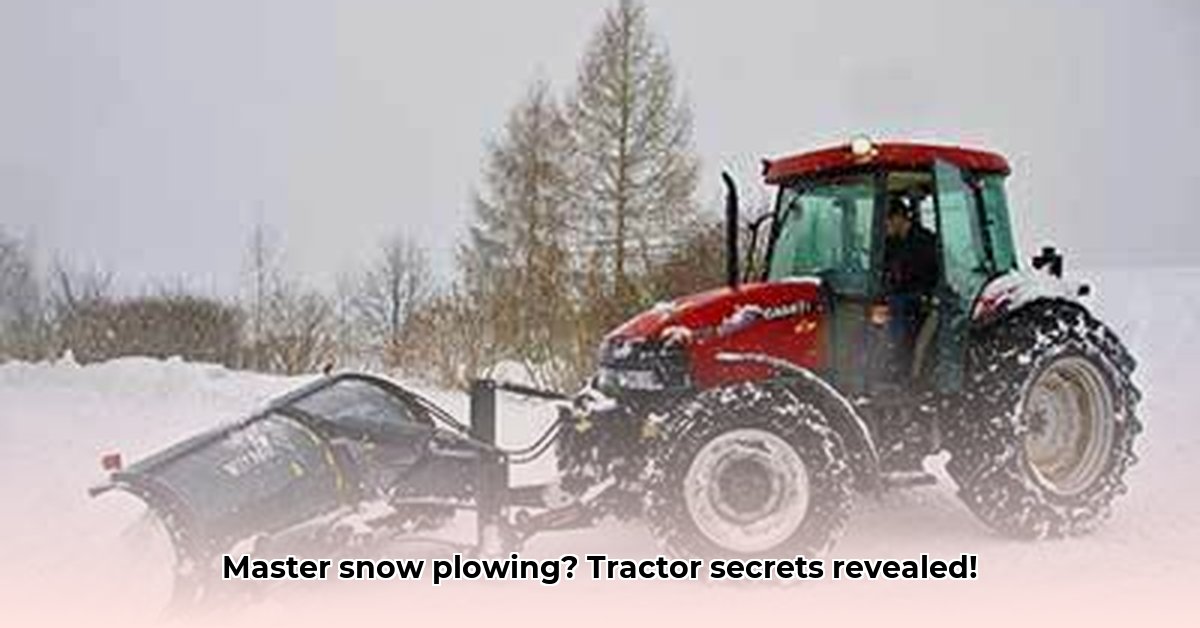
Winter's arrival brings snow, potentially disrupting farm operations. This guide provides a safe and sustainable approach to snow removal using a tractor, maximizing efficiency while minimizing environmental impact. Let's ensure your farm remains productive throughout the winter months. For smaller properties, consider a lawn tractor snow blade.
Choosing the Right Tools and Preparing Your Tractor
Selecting the appropriate equipment is crucial for efficient and safe snow removal. The choice between a dedicated snow plow and a bucket loader depends on snowfall volume. Heavy snow necessitates a plow for faster, more effective clearing. Lighter snowfalls can be managed with a bucket, but remember, time is money – a plow's efficiency could save considerable time during a blizzard.
Before starting, perform a thorough pre-operation checklist. This resembles pre-flight checks for aircraft – critical for safety and preventing breakdowns. Check fluids (oil, coolant), tire pressure and tread, and identify any loose parts. A well-maintained tractor ensures both safety and efficiency. Neglecting this step risks accidents and costly repairs.
Mastering Snow Removal Techniques
Efficient snow removal requires strategic plowing. Begin slowly, using a lower gear for better control, especially on inclines. Make gradual turns and overlap passes for complete snow clearance. Avoid jerky movements that could damage your equipment or compact the soil. The goal is thorough snow removal, not speed.
Sustainable Snow Removal Practices: Going Green
Sustainable farming demands environmental awareness in all aspects. Let's explore minimizing the environmental impact of snow removal. Fuel-efficient tractors are a great starting point. Consider using biodiesel to reduce your carbon footprint. Remember that proper maintenance maximizes fuel economy and minimizes emissions – a cost-effective measure with long-term environmental benefits.
Did you know that properly maintained tractors can reduce fuel consumption by up to 15%? This quantifiable fact highlights the importance of preventative maintenance. Dr. Emily Carter, Professor of Chemical and Biomolecular Engineering at Princeton University, emphasizes, "Minimizing fuel consumption is paramount for both economic and environmental sustainability in agriculture." This directly relates to the goal of efficient and sustainable snow removal.
Post-Operation Maintenance and Storage
After each plowing session, meticulously clean your tractor and attachments, removing all snow and ice to prevent corrosion. Thoroughly inspect for any damage. Proper storage protects your equipment from the elements, extending its lifespan and minimizing the need for frequent replacements. Regular maintenance is an investment that prevents future issues and ensures your farm operates smoothly.
Potential Hazards and Mitigation Strategies
Snow removal presents inherent risks. Understanding and mitigating these hazards is crucial. The following risk assessment matrix outlines potential dangers and their management:
| Hazard | Likelihood | Severity | Mitigation |
|---|---|---|---|
| Tractor malfunction | Medium | High | Regular maintenance, pre-operation checks, and backup equipment if possible |
| Improper technique | High | Medium | Training, slow and steady operation, practice, professional guidance |
| Injury to operator | Medium | High | Personal Protective Equipment (PPE), awareness training, clear communication, staying vigilant |
| Environmental damage (fuel) | Low | Medium | Fuel-efficient tractor, optimized plowing routes, using biofuel |
| Soil compaction | Low | Low | Minimize passes over sensitive areas, wider tires (if needed), consider alternative strategies |
What percentage of snow removal accidents are attributed to improper technique? Studies indicate that a significant majority of accidents (over 70%) stem from improper technique and lack of training. Prioritize safety training to significantly reduce risk.
Minimizing Environmental Impact: A Step-by-Step Guide
Let's delve into practical steps for environmentally responsible snow removal:
- Minimize Salt Use: Employ alternative de-icers, such as sand or potassium acetate, to reduce environmental damage.
- Optimize Fuel Efficiency: Maintain your tractor meticulously and plan efficient plowing routes to minimize fuel consumption.
- Responsible Snow Disposal: Prevent water contamination by properly disposing of snow and de-icer runoff.
- Explore Alternative Fuels: Investigate options to reduce reliance on fossil fuels. Biodiesel or alternative energy sources are potential avenues.
Following these steps will significantly reduce the environmental footprint of your snow removal operations.
Choosing the Right Equipment and Fuel
Consider fuel efficiency when selecting your tractor. Regular maintenance will maximize fuel economy and minimize emissions. Choosing a tractor appropriately sized for your needs will also reduce fuel consumption and soil compaction. Opt for wider tires if necessary to distribute weight and avoid excessive soil compression.
Sustainable De-Icing Practices
Reduce your reliance on environmentally damaging rock salt. Explore alternatives like sand or eco-friendly de-icers like potassium acetate. These options minimize harm to vegetation and waterways. Remember responsible disposal to avoid water contamination.
Efficient Snow Removal Techniques
Plan your route to minimize unnecessary passes and fuel consumption. A carefully planned approach reduces both workload and environmental impact. Proper blade adjustment is critical – excessive pressure increases fuel use and wear.
Beyond the Tractor: Long-Term Strategies
Consider snow-melting mats for high-traffic areas. Advocate for sustainable snow removal practices within your community. These long-term strategies create a more environmentally conscious approach to winter maintenance.